Paweł Pietkiewicz; Marta Koper; Paweł Falkowski; Aleksandra Lesiak; Jacek Calik; Katarzyna Korecka; Piotr Giedziun; Bengü Nisa Akay; et al
Abstract
Background:
Polarization reveals critical diagnostic clues embedded in a range of diagnostic algorithms aimed at early skin cancer detection, but device-dependent visualization differences raise safety concerns.
Objectives:
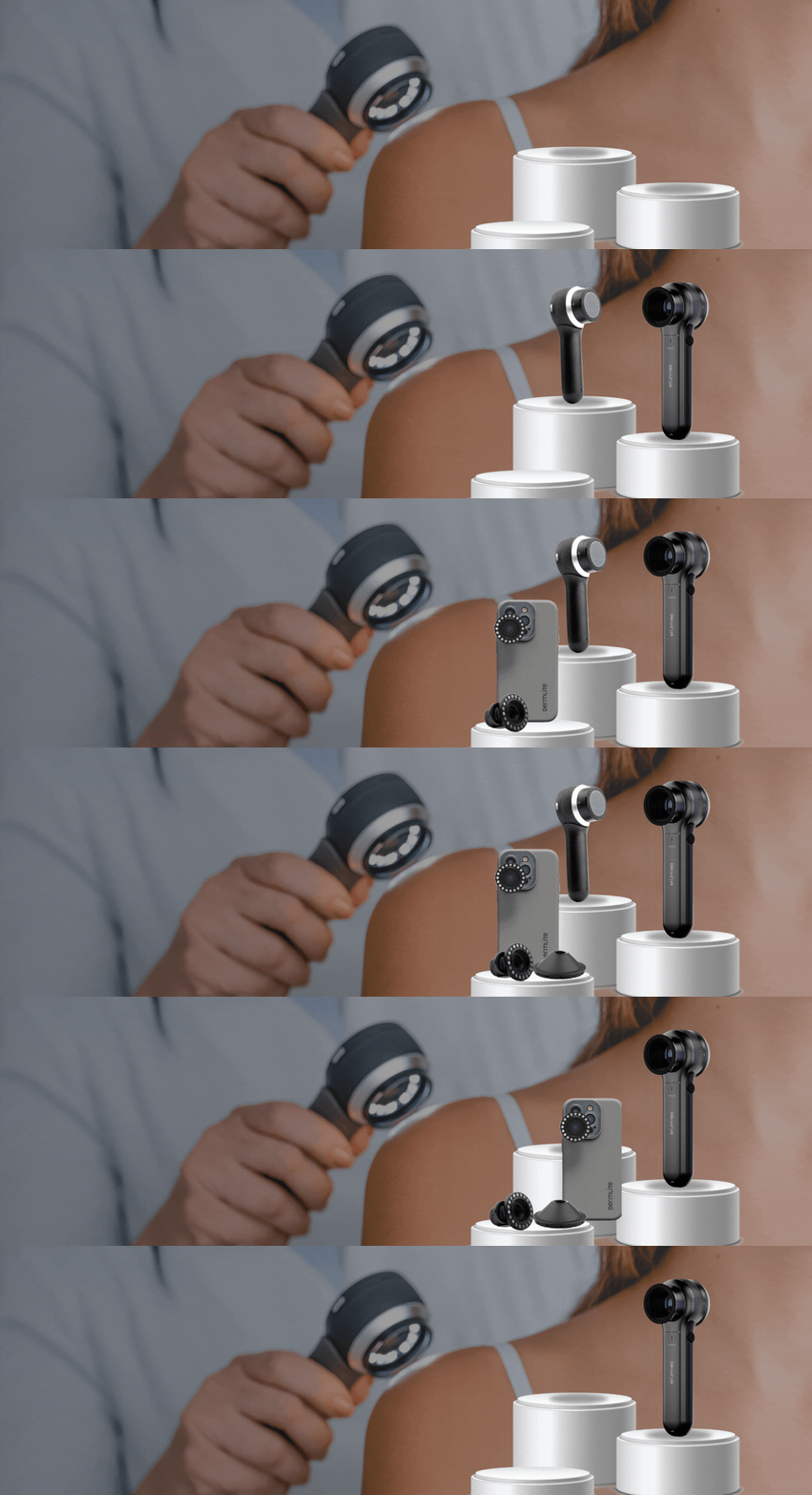
The POLARIS study compared polarization-dependent structure visibility across seven commercial handheld dermatoscopes.
Methods:
Twenty international dermatoscopists, informed of the target polarization-dependent structure(s) in each case and partially blinded to dermatoscope model, evaluated standardized cases imaged using seven devices (DL3, DL4, DL5, Handyscope, DELTA 20 T, DELTA 30, and DELTA 30 PRO). Feature visibility was scored on a 5-point Likert scale and analyzed with a cumulative link mixed model.
Results:
Device type significantly impacted visibility (10,779 ratings by 20 raters of 61 lesions; p < 0.001). Against DELTA 30, every other device had higher odds of a better rating: the smallest odds ratio was 7.0 and the largest, for Handyscope, was 43.2. DELTA 30 received low-visibility ratings in 69.5% of assessments. Handyscope also was rated above every other device (odds ratios 2.3–43.2), and no device was estimated to outperform it for any structure. Those other devices formed a graded order. DELTA 30 PRO was rated markedly higher than DELTA 30 (odds ratio 10.1, Bonferroni-adjusted 95% CI 4.6–22.4).
Conclusions:
Hybrid dermatoscopes differ significantly in their visualization of polarization-dependent structures which remain vital diagnostic clues. The suboptimal recognition of these features by underperforming devices, highlights the need to understand how these disparities impact diagnostic accuracy. Consequently, dermatoscopists should be aware of the performance of the devices they use.
To read the complete article please click here.