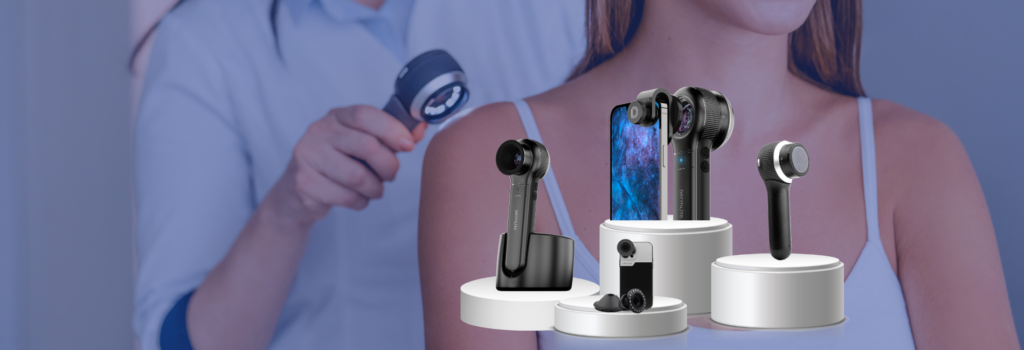
The DermLite range is among the most widely used handheld dermatoscopes in the world, and two models dominate the buying decision: the flagship DL5 and its predecessor, the DL4. Both are excellent instruments, but they suit different needs and budgets. This comparison breaks down the real differences optics, polarisation, UV, battery, and smartphone connectivity so you can choose the right dermatoscope for your clinic with confidence.
A Quick Overview
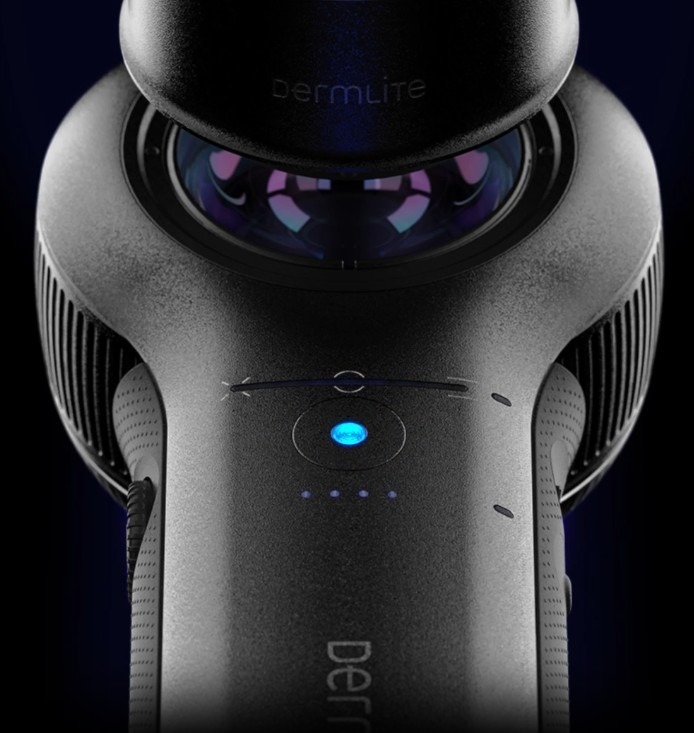
The DermLite DL5 is the current-generation flagship: a hybrid dermatoscope with variable polarisation, 365nm UV illumination, and a high-capacity battery. The DermLite DL4 is the proven fourth-generation model lighter, simpler, and more affordable, with the same core 10x optics and hybrid polarised/non-polarised imaging that made DermLite the clinical standard. In short: the DL5 adds capability; the DL4 delivers the essentials at a lower price.
Feature Comparison at a Glance
| Feature | DermLite DL5 | DermLite DL4 |
|---|---|---|
| Generation | Flagship (current) | 4th generation |
| Magnification | 10x | 10x |
| Polarisation | Variable / super-polarised (scroll through range) | Polarised & non-polarised toggle |
| 365nm UV | Yes | No |
| PigmentBoost | Yes | No |
| Torch LED | Yes (high-powered) | No |
| Battery | High capacity | Standard |
| Smartphone connection | MCC universal connector | Magnetic faceplate connect |
| Infection control | Autoclavable plate / IceCap | IceCap system |
| Best for | High-volume & advanced dermoscopy | Everyday screening & value |
How the Two Compare, Feature by Feature
Optics and Magnification
Both dermatoscopes offer true 10x magnification the clinical standard for assessing pigment networks, vascular structures, and fine lesion detail. In day-to-day pattern analysis, image quality on both is excellent. The DL5’s larger optical system and refined illumination give it an edge for demanding work, but a clinician using a DL4 isn’t missing the fundamentals of good dermoscopy.
Polarisation: The Biggest Difference
This is where the two models diverge most. The DL4 switches between two fixed modes polarised light for deeper vascular and structural detail, and non-polarised light with contact fluid for surface features which is already a capable combination for most clinical work. The DL5 replaces that switch with a continuous dial: rather than two fixed settings, you move gradually between polarisation levels, letting you track a feature as it appears and fades between the surface and deeper layers in real time. For clinicians who want that level of control mid-examination, it’s a meaningful upgrade over toggling between two states. Dermoscopedia has a detailed overview of why polarisation matters clinically for anyone wanting the underlying optics.
UV Illumination and PigmentBoost
The DL5 adds built-in 365nm UV illumination, letting you highlight fluorescent structures at full magnification useful for certain infections, pigmentary conditions, and specialised applications. It also includes PigmentBoost, which enhances visualisation of pigmented lesions. The DL4 offers neither. For a general skin-cancer screening clinic, these are a bonus rather than a necessity; for specialists who use them routinely, they can be decisive.
Battery Life and Charging
Battery capacity is a practical, easily overlooked factor. In practice, the DL5’s larger battery means a busy clinic can image patients through a full day with fewer mid-session charges, and it comes with a desktop charging base that doubles as storage between patients. The DL4’s battery holds up fine for typical screening volumes but will need topping up more often under heavy, back-to-back use. Neither model’s runtime becomes a real constraint unless your clinic is running high patient volumes most days.
Smartphone Connectivity and Documentation
Both models connect to smartphones for image capture, by different means: the DL5 uses a universal MCC connector, while the DL4 uses a magnetic faceplate that attaches directly to compatible phones. Either way, pairing a handheld dermatoscope with a phone is a low-cost route into digital documentation. Clinics that want a more complete solution — stored patient records, side-by-side comparison, and structured reporting often pair a DermLite with a full digital system such as the MoleMax HD.
Infection Control
Cross-contamination is an increasing concern in dermoscopy. Both models support DermLite’s IceCap infection-control system of disposable snap-on caps, and the DL5 adds an autoclavable contact plate. For clinics with strict infection-control protocols, this is a genuine part of the buying decision rather than an afterthought.
Making the Buying Decision
Which Should You Choose?
Choose the DL5 if you want the most capable handheld DermLite available, with variable polarisation, UV, PigmentBoost, and extended battery life and you’re willing to invest more for that flexibility. It suits high-volume clinics and specialists who push dermoscopy to its limits.
Choose the DL4 if you want a proven, lighter, more affordable dermatoscope that still delivers 10x hybrid imaging for everyday skin checks. Many clinics run DL4 units as reliable workhorses and reserve a DL5 for advanced cases.
Price and Value
Budget is often the deciding factor. The DL4 sits at a lower price point, making it an attractive entry into professional-grade dermoscopy for a general practice or a clinic buying several units for multiple rooms. The DL5 commands a premium that reflects its added capabilities variable polarisation, UV, PigmentBoost, and the larger battery.
The right way to frame the decision isn’t “which is cheaper” but “which features will I actually use.” A clinic that will never use UV fluorescence gains little from paying for it, while a specialist who relies on it daily will find the DL5 well worth the difference. Current pricing for both models is available on their product pages.
Portability and Handling
Both instruments are pocket-sized and built for one-handed use, but they feel different in the hand. The DL4 is lighter and more compact, which some clinicians prefer for long screening sessions and mobile or outreach work. The DL5 is slightly larger to accommodate its bigger battery and additional light sources a trade-off that buys capability at a small cost in size. Neither is cumbersome; the choice comes down to personal preference and how the instrument will be used across a typical day.
Training and Support
Whichever model you choose, the value you get depends on how confidently your team uses it. DermLite instruments are designed to be intuitive, and the core skills of reading pigment networks, vessels, and structures under polarised and non-polarised light transfer directly between models. If your clinic is new to dermoscopy, pairing the hardware with structured training and access to reference image libraries will accelerate the learning curve far more than any single feature on the spec sheet.
Beyond DL5 vs DL4
Where the DL5 Plus Fits
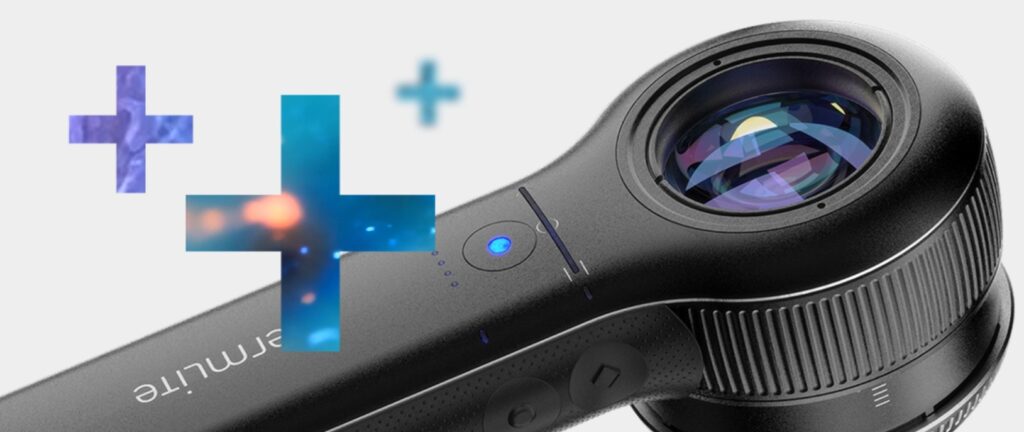
If you’re researching this comparison, you may also come across the DermLite DL5 Plus it’s worth knowing this is a distinct, separately priced product, not simply another name for the DL5. If the DL5 Plus is on your shortlist, compare it directly against both models in this guide rather than assuming it slots between them on price or features. The wider DermLite dermatoscope range also includes the Lumio series and other models suited to particular workflows.
Accessories and the Wider Ecosystem
A dermatoscope is rarely used in isolation. Contact plates (including hair-counting grids and small plates for awkward, concave areas), charging bases, rulers, eyepieces, and infection-control caps all extend what either instrument can do. The DL5’s autoclavable plate and charging base are geared toward high-throughput clinics, while the DL4’s lighter accessory set keeps it simple and portable. When budgeting, factor in the accessories your workflow actually needs — they affect both the up-front cost and day-to-day convenience.
The Bottom Line
There’s no universally “best” dermatoscope in the DL5 vs. DL4 debate only the best fit for a given clinic. The DL4 remains a superb, cost-effective instrument that covers everything most practitioners need for confident everyday dermoscopy. The DL5 is the choice when you want the fullest feature set, the longest battery life, and the flexibility of variable polarisation and UV. Match the instrument to how you actually work, the patients you see, and the budget you have, and either model will serve your clinic well for years.
Frequently Asked Questions
Is the DL5 worth the extra cost over the DL4?
For high-volume clinics and specialists who will use UV, PigmentBoost, and variable polarisation, yes. For routine screening on a budget, the DL4 delivers the essentials at lower cost.
Can both connect to a smartphone?
Yes, the DL5 uses a universal MCC connector and the DL4 uses a magnetic faceplate, so both support smartphone image capture for basic documentation.
Do I still need a digital imaging system if I have a DermLite?
A handheld dermatoscope is ideal for examining individual lesions, but for stored records, total body mapping, and change tracking, many clinics add a full system such as the MoleMax HD.
Is the DermLite DL5 Plus the same as the DL5?
No, the DL5 Plus is a separate, separately priced model. Compare it directly against the DL5 and DL4 rather than assuming where it fits.
See the DermLite Range in Action
The best way to choose is to try the technology in your own clinic. Book a free 15-minute MoleMax demo, and our specialist team will help you match the right dermatoscope or imaging system to your workflow, patient volume, and budget.