Dermatoscope costs in Australia vary by device, included accessories, and clinical workflow. The difference is not just branding. Optical quality, illumination options, power systems, imaging accessories, local support and whether the instrument is part of a wider digital documentation workflow all influence the eventual bill.
For a medical practice, the useful question is not simply “What is the cheapest dermatoscope?” It is “What equipment and support do we need for the examinations we perform?” This guide explains typical purchasing tiers, the costs that are easy to overlook and how to compare quotes consistently.
Pricing note: MoleMax Systems pricing, model availability, GST treatment and package inclusions should be confirmed directly through the MoleMax dermatoscope range or a current MoleMax quotation. This guide does not publish unverified prices.
Dermatoscope costs in Australia at a glance
The cost depends on the equipment category and what the clinic needs to accomplish. Use this comparison to define a suitable quotation rather than treating an isolated sticker price as the total investment.
| Equipment type | Key cost considerations | MoleMax next step |
|---|---|---|
| Entry-level handheld dermatoscope | Core illumination, optical design, power source and included accessories | Check the MoleMax dermatoscope range for currently available options |
| Versatile handheld dermatoscope | Polarised/non-polarised viewing, contact options, ergonomics and charging | Request a model-specific quote and list of inclusions |
| Advanced handheld dermatoscope | Additional illumination controls, capture compatibility, accessories and daily-use convenience | Review the DermLite DL5 product page and confirm the current configuration |
| Digital skin-imaging or mole-mapping platform | Hardware, software, implementation, documentation workflow, training and support | Consult the MoleMax system pricing guide and request a configuration-specific quote |
No single price suits every clinic. Compare itemised quotations on a consistent GST-inclusive basis, including accessories and any implementation costs. Contact MoleMax Systems for current pricing.
Why do dermatoscope prices vary?
1. Optical design and viewing experience
A dermatoscope must provide suitable magnification and illumination for visual examination. Two instruments may both advertise approximately 10× magnification yet differ in field of view, optical ergonomics, working distance and how comfortably they can be used during a full clinic session.
Do not compare optical specifications on magnification alone. Assess whether the clinician can clearly examine the structures relevant to their practice, including the practical advantages of a larger viewing area. Hands-on evaluation is valuable where possible.
2. Polarised, non-polarised and variable illumination
Polarised dermoscopy can reduce surface reflections without requiring an immersion medium in many examinations. Non-polarised contact dermoscopy may show some superficial structures differently. Hybrid or variable-polarisation designs let clinicians choose the mode most appropriate to the examination.
Advanced illumination adds expense, but it does not remove the need for training or clinical judgement. A feature is valuable when the team knows when and why it will be used, not merely because it appears on the specification sheet.
For more on selecting examination modes, see Which Dermatoscope Should I Use?.
3. Rechargeable batteries and charging accessories
Check what is included with the advertised instrument. A desk charging base, replacement charging components and the practicality of charging between consultations can affect everyday use. A lower sticker price can become less attractive if required accessories are separate.
4. Smartphone imaging and clinical documentation
Taking an image through a handheld dermatoscope is different from operating a complete patient imaging record. Smartphone adapters, supported devices and capture workflows should be confirmed before purchase. Some practices may need more structured follow-up documentation, repeatable photography or image management rather than a standalone handheld device.
Ask where photographs will be stored, how they will be linked to a patient record and whether the solution fits local privacy, clinical governance and record-retention obligations. Avoid storing identifiable patient images in unapproved personal accounts or galleries.
5. Supplier support, servicing and replacement arrangements
Clinical equipment can be inexpensive to buy yet disruptive when it is unavailable. Compare the written warranty, local service availability, repairs, expected turnaround and whether temporary replacement equipment is offered. Do not assume that all sellers provide identical terms for the same model.
What does a clinic actually need to budget for?
A sensible dermatoscope budget has three layers:
-
The device: model, viewing modes, optics and included power equipment.
-
The working setup: any contact plates, infection-control supplies, adapters, carrying protection and documentation accessories needed by the practice.
-
Ownership and operation: training, servicing, repairs, replacement parts, software if used, and time spent managing images and records.
This matters when a clinic is choosing between buying a portable examination instrument and investing in a broader imaging workflow. A handheld dermatoscope primarily supports close visual examination. Digital dermoscopy and total-body or regional imaging systems can also support documentation and longitudinal comparison, depending on the configuration. These are different purchases with different operating requirements.
For a larger implementation, MoleMax provides a system pricing guide covering configurable options and add-ons. Seek a complete quotation rather than assuming a single retail hardware price captures the cost of deployment.
Which dermatoscope price tier fits your clinic?
General practice beginning routine dermoscopy
Prioritise a reliable instrument, clear viewing, comfortable handling and access to appropriate training. A compact device may be sufficient when examinations are relatively occasional and structured image documentation is handled separately.
Choose the illumination capability your clinicians are trained to use. Budget for cleaning procedures and the accessories actually needed, not every optional attachment.
Dedicated skin-cancer clinic with frequent examinations
Daily use makes ergonomics, convenient charging, versatile lighting and straightforward instrument maintenance more important. An advanced hybrid device may justify its higher acquisition cost where the additional modes and accessories are regularly used.
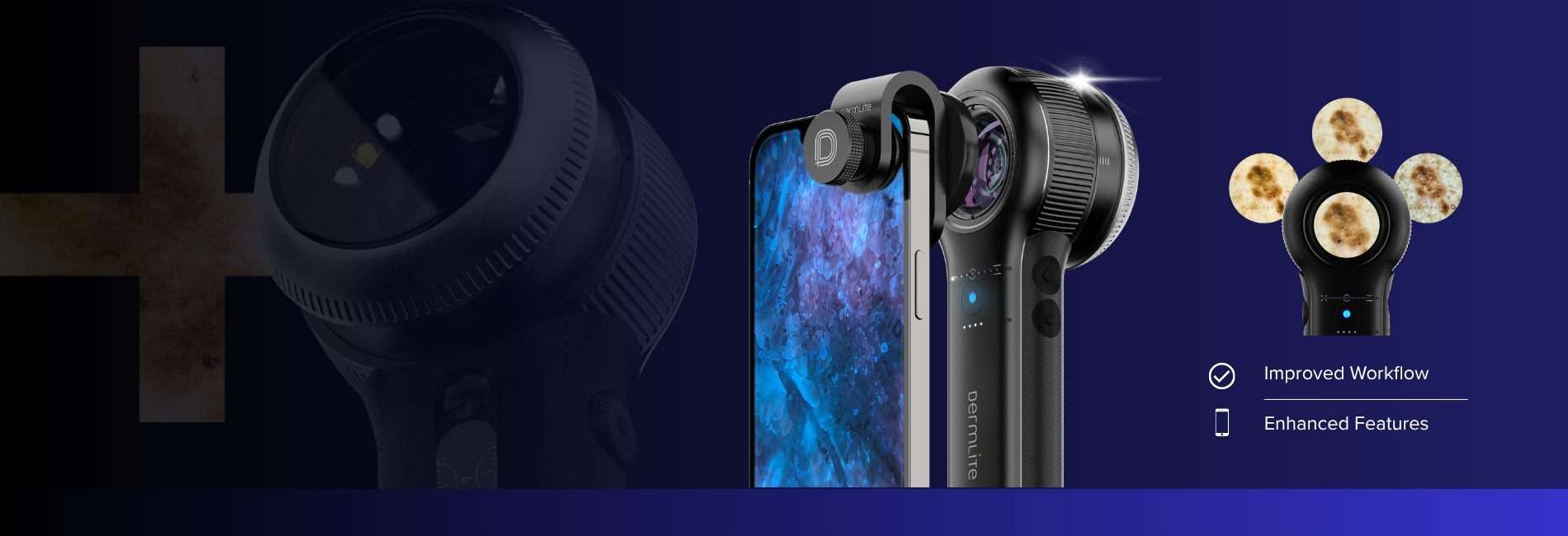
The DermLite DL5 is an example of a feature-rich handheld option. MoleMax’s product information lists 10× optics, a 32 mm lens system, variable polarisation, 365 nm UV illumination, a rechargeable battery and an included smartphone adapter. Confirm the latest package inclusions, compatibility and support terms on the actual quotation.
Clinic monitoring many high-risk patients over time
Consider whether the practice requires repeatable photographs, lesion localisation, longitudinal comparison and a defined image-review workflow. Buying a more advanced handheld instrument alone does not create a complete digital monitoring system.
Digital imaging investment should be evaluated by its workflow and clinical governance requirements. Assess capacity, staff training, data management, integration and service—not just the camera resolution or purchase price. Decisions about which patients benefit from monitoring remain clinician-led.
Multi-clinician or expanding practice
Standardising device models and documentation procedures may make training and supplies simpler. Before ordering multiple instruments, determine whether each clinician needs an individual unit, whether rooms share equipment safely and how imaging records are accessed across consulting spaces.
Five questions to ask before accepting a dermatoscope quote
-
What exactly is included? Compare the main unit, charging equipment, contact accessories, imaging adaptors and carrying case line by line.
-
Is the quoted amount GST-inclusive? Ask the supplier to show the GST treatment clearly and identify shipping charges where relevant.
-
Does the device support how we examine patients? Assess polarisation modes, handling, battery routine and whether smartphone imaging is genuinely necessary.
-
How will images and patient information be managed? If documentation is required, confirm compatibility, user permissions, approved storage and ongoing responsibilities.
-
What happens if the device fails? Request written warranty and service information, including repair arrangements and any exclusions.
A quote comparison sheet can help practices score these factors rather than selecting the lowest number in a price column.
A simple total-cost example
Consider two hypothetical purchasing options over three years. The following values are illustrative arithmetic, not live offers or vendor claims:
| Example budget item | Basic setup | Advanced setup |
|---|---|---|
| Device | A$700 | A$2,500 |
| Accessories | A$100 | A$250 |
| Replacement/maintenance allowance | A$100 | A$150 |
| Three-year illustrative total | A$900 | A$2,900 |
The example deliberately excludes staff time, training, software, practice integration and any financing costs; those could materially change the result. It shows why the comparison should cover the entire working setup, not just the initial hardware line.
An instrument does not need to be the most expensive to be clinically appropriate. The goal is equipment suited to the clinician’s training, patient population and intended workflow.
Dermatoscope cost FAQs
How much does a dermatoscope cost in Australia?
Pricing varies by model, illumination features, accessories and whether the clinic needs an integrated imaging system. For an accurate Australian-dollar figure, review the MoleMax dermatoscope range and request an itemised, GST-inclusive quotation for the exact setup.
Is a more expensive dermatoscope always better?
No. Higher-priced models may offer advanced optics, illumination modes, accessories or convenience features. Those advantages matter only if they are relevant to the clinic and clinicians know how to use them. Training and clinical workflow remain essential.
Are a dermatoscope and a mole-mapping system the same purchase?
No. A handheld dermatoscope supports magnified examination of lesions. Mole-mapping or digital imaging systems may provide wider photographic documentation, image management and repeat-visit comparisons. Their hardware, software and implementation requirements differ.
Do I need to buy a smartphone attachment?
Not necessarily. Smartphone attachment is useful if your clinic has an approved image-capture workflow and a compatible device. For direct examination without image capture, it may not be required. Verify exact phone and case compatibility before ordering.
How often should a clinic replace its dermatoscope?
There is no universal replacement interval. Review image quality, lighting, battery and mechanical condition, infection-control requirements, servicing availability and evolving clinical needs. Follow manufacturer guidance and local equipment-management policies.
Can dermoscopy replace a biopsy?
No. Dermoscopy is an aid to clinical assessment; suspicious lesions still require appropriate clinician-led investigation and, when indicated, histopathological evaluation. Equipment cost should never determine whether an indicated investigation proceeds.
Compare equipment by clinical fit, not only purchase price
A good dermatoscope buying decision balances optical performance, illumination, daily usability, image documentation and support. Entry-level handheld devices can serve routine examinations, while advanced instruments offer additional modes and conveniences. Practices that require long-term imaging should assess the larger system separately.
Review the MoleMax DermLite dermatoscope range for available models and request an itemised quotation for the configuration suited to your clinic. For integrated imaging, the MoleMax pricing guide provides the appropriate starting point.