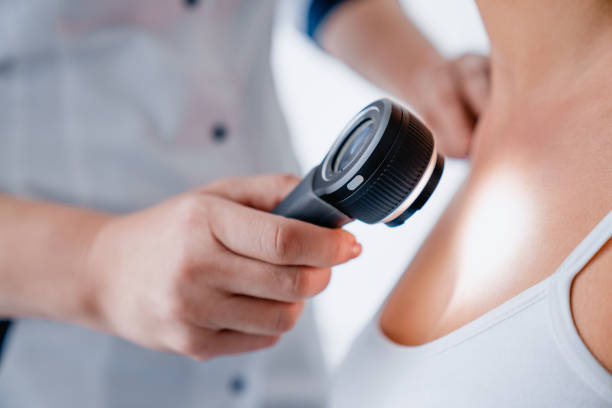

A handheld dermatoscope is a clinical imaging tool designed to reveal subsurface skin structures that cannot be seen with the naked eye. It enables precise examination of pigmentation, vascular patterns, and lesion morphology. Dermoscopy is a critical component of modern melanoma detection. Handheld devices remain essential because they offer portability, consistency, and immediate diagnostic clarity.
Handheld Dermatoscope vs Magnifying Glass

A handheld dermatoscope vs a magnifying glass comparison demonstrates a significant diagnostic gap. Magnifying glasses offer only surface-level enlargement and cannot eliminate reflections or reveal deeper structures. A dermatoscope provides polarised or non-polarised illumination, higher optical detail, and controlled visualisation of pigment networks, vessels, and lesion architecture.
For practices that still rely on basic magnifiers, transitioning to a proper dermatoscope reduces uncertainty and improves lesion assessment.
Clinical Use: Handheld Dermatoscope for Dermatology
A handheld dermatoscope for dermatology is used extensively in melanoma screening, pigmented lesion monitoring, and routine full-body skin checks.
It enables early identification of asymmetry, atypical pigmentation, and suspicious growth patterns.
Dermatologists and skin cancer practitioners also use handheld dermoscopy to decide whether a lesion requires biopsy, follow-up, or digital documentation.
Modern clinics integrate handheld Dermatoscopes with imaging platforms like MoleMax Systems to track changes over time and ensure consistent monitoring.
Technology Evolution and Device Types
Handheld dermatoscopes are available in polarised, non-polarised, and hybrid formats. Polarised light reduces surface glare and enhances visualisation of deeper pigment and vascular structures. Non-polarised dermoscopy reveals surface details and requires a contact plate with gel. Hybrid devices allow practitioners to switch instantly between modes.
Digital handheld dermatoscopes capture, transfer wirelessly, and are compatible with dermoscopy software. LED lighting, rechargeable batteries, and improved optics define the current generation of devices.
Handheld Dermatoscope Market Overview
The handheld dermatoscope market continues to expand as skin cancer rates rise globally and early detection becomes a priority. Clinics increasingly invest in portable, digital, and hybrid dermoscopy tools. Market growth is driven by increased awareness, improved technology, and broader use of dermoscopy in general practice, not just dermatology.
Manufacturers such as MoleMax contribute to market development with research-backed imaging systems and high-precision optics.
Benefits for Clinics and Practitioners

A handheld dermatoscope enhances clinical workflow by enabling rapid lesion evaluation, improved diagnostic confidence, and seamless integration with imaging and storage solutions. These devices are suitable for dermatology clinics, hospitals, primary care physicians, and skin health practitioners. They are also beneficial for teledermatology services.
Handheld dermoscopy minimises unnecessary excisions, supports accurate follow-up intervals, and strengthens patient communication through visual explanations.
Conclusion
The handheld dermatoscope remains one of the most important tools in early skin cancer detection. It outperforms magnifying tools in clarity, accuracy, and diagnostic reliability.
With advancements in optical technology and digital integration, handheld dermoscopy continues to lead the market and provide clinicians with essential capabilities for identifying melanoma and other skin conditions.